
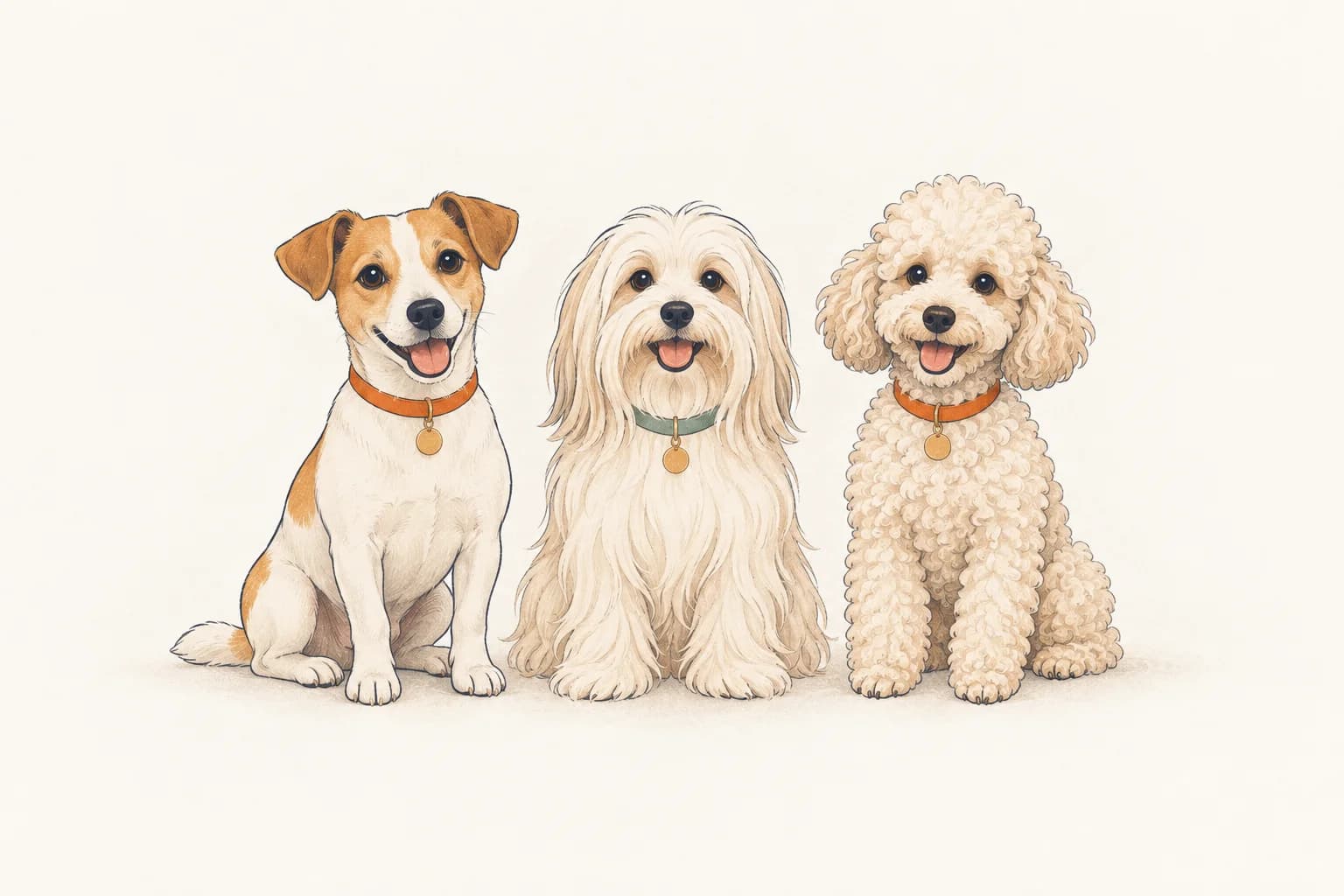
A good groom starts with understanding the coat in front of you. Texture, density and the condition of the skin all affect the tools and preparation a dog needs. Breed gives you a starting point, but the individual coat matters too: choosing a familiar brush or haircut without assessing it first can make the job harder and less comfortable for the pet.
1. Five coat types you will meet in the salon
These broad categories are useful for planning a groom. They describe common characteristics rather than replacing a hands-on assessment of each dog.
- Silky coats: Yorkshire Terriers, Maltese, Shih Tzus and Afghan Hounds are familiar examples of fine, longer coats. Length and texture make careful detangling and a suitable brushing routine an important part of preparation.
- Curly or wool coats: Poodles, Bichon Frises and Bedlington Terriers have coats in which loose hairs can remain caught among the curls. Surface brushing alone may leave tangles closer to the skin.
- Double coats: Golden Retrievers, German Shepherds, Huskies and Pomeranians combine soft undercoat with a protective outer layer. Removing loose undercoat and preserving the coat’s structure are different tasks from a short all-over clip.
- Wire coats: Schnauzers, Fox Terriers and Airedales are associated with a coarse outer texture. Hand-stripping is part of traditional grooming for many wire coats, with the approach depending on the individual dog and the agreed style.
- Smooth or short coats: Dobermanns, French Bulldogs, Boxers and Beagles may look straightforward to maintain, but short hair does not mean there is no shedding or skin care to consider.
2. Match the equipment and preparation to the coat
Use the coat assessment to narrow down the tools, then choose the specific equipment and products that suit the pet. The following table brings together the main considerations.
| Coat | Tools to consider | Preparation focus | Watch for |
|---|---|---|---|
| Silky | Suitable pin brush and metal comb | Gentle detangling and a smooth, carefully dried finish | Pulling or breakage when brushing fine hair |
| Curly | Appropriate slicker brush and combination comb | Section-by-section preparation and fluff drying for scissor work | Tangles left beneath a brushed surface |
| Double | Undercoat rake and suitable brush | Loose-undercoat removal, bathing and controlled drying | Treating a close clip as the default maintenance option |
| Wire | Tools appropriate to professional stripping or the agreed trim | Preserving the desired texture | Products or techniques that do not suit the intended finish |
| Smooth or short | Rubber grooming mitt and suitable bristle brush | Gentle removal of loose hair and appropriate bathing | Excessive pressure or repeated work over sensitive skin |
3. A practical check before each groom
- Look at the skin: Part the coat and note visible redness, lumps, wounds or other changes. Tell the owner about concerns and seek veterinary input where needed before continuing.
- Check for tangles beneath the surface: Pay attention to areas such as behind the ears, the armpits and the groin. Assess what can be combed comfortably and where the grooming plan needs to change.
- Plan the drying stage: Choose the drying approach for the coat and the dog’s tolerance. Keep control of the heat and airflow, with particular care around the eyes and ears.
- Keep a useful record: Write down the products, grooming lengths and relevant observations. These details give the next groomer a starting point and help the team plan future appointment time.
4. Turn coat knowledge into a consistent service
The value of understanding coat types is practical: you can prepare the right tools, explain the service clearly and recognise when the original plan needs adjusting. Record what worked for that dog rather than relying only on a breed label.
PatiPilot brings the pet’s grooming history and appointment details together. When the dog returns, your team can review previous notes, confirm the owner’s preferences and plan the next visit with better information.
Keep coat history and appointment planning connected as your salon grows. Get to know PatiPilot →